Captain William H Carney: The Man Who Would Not Let the Flag Fall

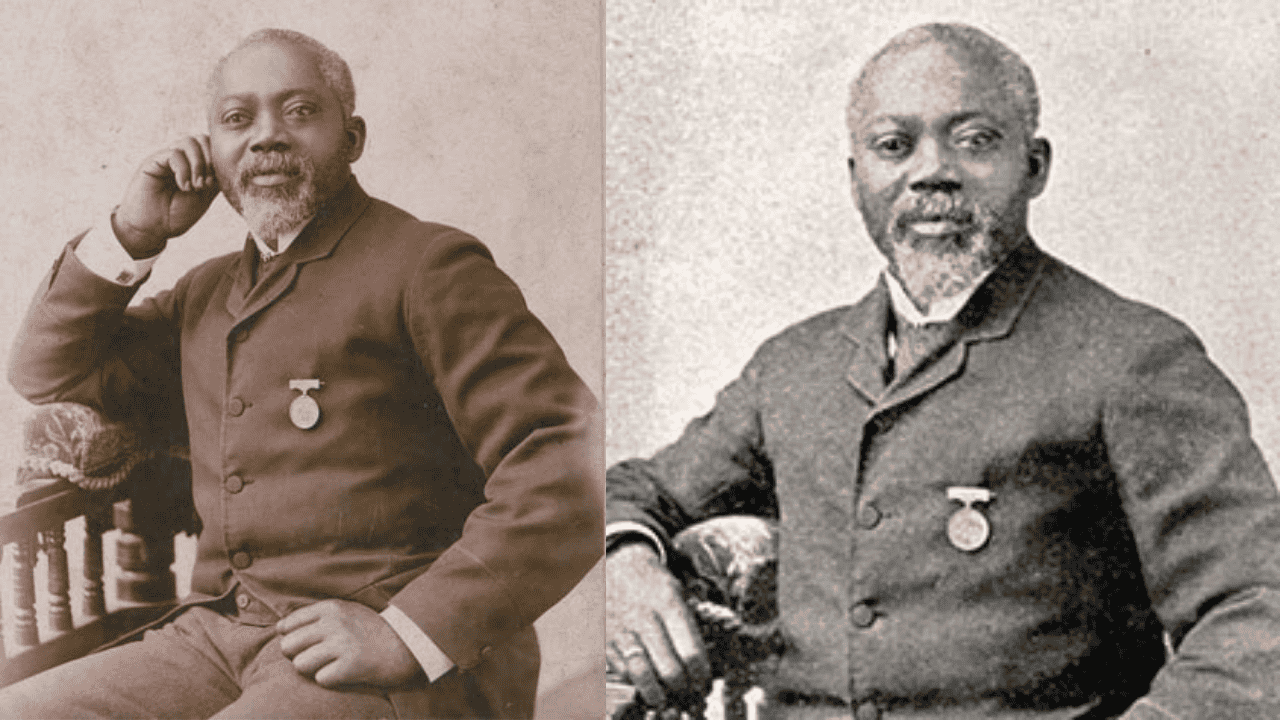
Captain William H Carney: The American historical record is full of heroes: presidents, generals, and politicians. However, some of the greatest acts of heroism were performed by people whose names are not commonly used in everyday conversation. One such hero is William Harvey Carney, a soldier who served in the Union Army during the Civil War and redefined the meaning of patriotism in a nation torn apart by conflict.
The life of Captain William H Carney is not just a story about the Civil War; it is a story about who we are and the irony of a slave fighting for a nation that had denied him his freedom just a few decades prior. Carney’s heroics during the assault on Fort Wagner in 1863 led to his being awarded the Medal of Honor, the first African American recipient of the nation’s highest award for heroism. However, his name is not commonly used in everyday conversation like some of his contemporaries.
To understand William Harvey Carney is to understand a level of American history that is not commonly known: the level of heroism in the face of the impossible.
Captain William H. Carney Early Life
William Harvey Carney was born a slave in Norfolk, Virginia, in 1840. His early life was affected by the harsh realities of slavery in America’s Southern states. However, his life took a dramatic turn when his father escaped to freedom via the Underground Railroad to Massachusetts. After a long period of separation, Carney’s family was reunited in New Bedford, a city famous for its abolitionist culture.
As a resident of a free state, Carney’s life was affected positively. He was educated and became a devout Christian, even planning to become a minister himself. People who knew him described him as a serious individual with strong moral beliefs. However, when America’s Civil War began, with slavery’s future a major factor in America’s destiny, Carney decided to serve his nation in a different capacity.
In 1863, when America officially began to recruit African American soldiers, Carney enlisted in the 54th Massachusetts Infantry Regiment. This regiment would go down in American history as one of the most famous Civil War regiments.
The 54th Massachusetts: Fighting Two Battles at Once
The 54th Massachusetts Infantry Regiment was among the first officially sanctioned African American regiments in the Union Army. The formation of the regiment was a controversial issue. There was a lot of uncertainty among Americans about the discipline and bravery of African American soldiers. Even among the Union forces, prejudice was rampant.
The men of the 54th Massachusetts received lower pay than their white counterparts. They were given dangerous assignments and faced the risk of severe treatment if they were caught by the Confederates. Yet they aimed to prove their worth in combat.
The chance for the regiment arrived in July 1863 at Fort Wagner, a heavily fortified Confederate outpost in Charleston Harbor in South Carolina.
The Assault on Fort Wagner
On July 18th, 1863, Union forces were ready for a frontal assault of Fort Wagner. The 54th Massachusetts was chosen for this perilous task. It was a formidable assignment. The fort was fortified with sand walls, artillery, and well-positioned Confederate forces. The Union forces had to cross open beach areas in the face of unrelenting gunfire.
As the regiment advanced, chaos broke out. The cannon fire and bullets flew through the advancing Union forces. The flag bearer of the regiment, the man waving the American flag, was a prime target. The flag bearer was hit during the battle.
In Civil War battles, the flag was not just a symbol of patriotism. It was a visual aid for troops in the midst of smoke and confusion. If the flag fell, it could be a signal of disarray and retreat. Seeing this happen, Carney rushed forward and picked up the flag before it reached the ground.
Carney continued to advance despite the heavy fire. During the assault, he was wounded several times. He was shot in the arm, as well as in the leg. Nevertheless, he continued advancing towards the fort’s wall. However, the assault was unsuccessful, and the Union soldiers had to retreat. Yet, despite being wounded and covered in blood, Carney did not surrender the flag.
Carney safely returned the flag to the Union lines. As he finally succumbed to his wounds, he is said to have informed other soldiers that he had done his duty, and the flag had never been on the ground.
Captain William H Carney: Recognition Delayed but Not Denied
Fortunately, Carney lived through the battle, although his injuries were serious. His heroism during the battle at Fort Wagner gained him recognition among his peers, but it would take him a while before he gained national recognition.
It was not until 1900, or nearly 37 years after the battle, that Carney received the Medal of Honor. It should be noted that it took so long for Carney to be awarded the Medal of Honor because of racial discrimination during that period. However, when he was finally awarded it, it was of great importance because Carney became the first African American to be awarded the Medal of Honor for his role during the Civil War.
His bravery during the battle, especially when he took and defended the flag under heavy fire, was specifically cited when he received the Medal of Honor. It should be noted that Carney’s recognition was of great importance because it marked recognition of the role of African American soldiers during the war.
Cultural Memory and the Film “Glory”
The story of the 54th Massachusetts was revived in 1989 when the movie Glory was released. This movie depicted the formation of the 54th Massachusetts Regiment and their assault on Fort Wagner.
Although the movie vividly depicted the courage of the 54th Massachusetts Regiment, individual acts such as that of Carney may not be sufficiently explored in public memory. Carney’s act of keeping the flag from falling has significant symbolism, especially when one considers his background.
A man who was once a slave dared to risk his life to defend the flag of a country that did not grant him freedom. This paradox is essential in appreciating the nuances of American history.
Life After the War
After his recuperation, Carney went back to Massachusetts. Unlike other heroes of the war who sought fame and glory, Carney took a different route. He worked for decades as a postal worker in New Bedford. He remained active in veterans’ affairs and other community activities. He did not pursue fame and glory.
He lived as a respected member of society, and his life was based on the same principles of duty that had been his guide in battle. He died in 1908 and was buried with full military honors as a testament to his respectability.
Why William H. Carney Still Matters
Carney’s life is still highly relevant in today’s discourse on equality, patriotism, and service. His life is a reminder that the history of the nation was not made by a few simple characters.
He was a soldier who fought in an era when African Americans were trying to prove themselves as citizens of the United States. His heroism was a reminder that loyalty and heroism knew no color. More than anything else, his life is a reminder of the complexities of a nation that was saved by the heroism of men who had once been slaves.
Carney’s heroism was not about heroism; it was about duty. He stepped forward in a moment of crisis because he knew it was his duty. His sense of duty is timeless and continues to resonate today.
Conclusion: The Legacy of Quiet Courage
The life of Captain William H Carney is a testament to a fundamental truth about American history: some of our country’s greatest heroes are not always its most well-known. The bravery of Captain Carney during the Civil War was not flashy or showy. It was deliberate and deeply principled.
From his humble beginnings as a slave to his place in history as a Medal of Honor recipient, the life of William H. Carney is a testament to both the strength of the human spirit and the idea that our actions and commitment to a higher purpose than ourselves are what give our lives meaning.
In recalling the life of Captain William H Carney, we are reminded that our history was made not just by those leaders who rose to greatness in the public eye, but also by those individuals who demonstrated a commitment to a higher purpose than themselves.
For more inspiring stories and real life struggles of unsung heros keep exploring Hit Bios and our partner site Vrl News. Share your valuable views with us in comments down below. Also Check out Hit Bios at Pintrest @VrlNews.
More for you-
Virginia Hall’s Intelligence Legacy: The Spycraft That Helped Win WWII