Lucky Bisht — Biography, the RAW Hitman Book, Modi-Bodyguard Claim & His Real Story (2026)

Quick Info: From: Uttarakhand | Known As: “Agent Lima” · “RAW Hitman” | Claimed Background: Ex-RAW agent · NSG commando · sniper · former PM Modi security officer | Now: Author · screen-writer · social-media figure (1.2M+ followers)
Note: Much of Lucky Bisht’s public profile rests on claims about secret intelligence work that, by their nature, cannot be independently verified — India’s RAW does not confirm the identities of agents. This article clearly separates what is documented (the book, the court case, his public/media career) from what rests on his own account, and does not present unverifiable claims as established fact.
| Full Name | Laxman Singh Bisht (known as Lucky Bisht) |
| Code Name (per his account) | “Agent Lima” |
| Profession | Author · Screen-writer · Producer · Social-Media Personality (claims ex-intelligence background) |
| Origin | Uttarakhand (sources vary: Gangolihat/Pithoragarh or Haldwani) |
| Nationality | Indian |
| Family Background | Reported to come from a military family |
| Claimed Career | Indian Army · Assam Rifles · Special Forces · RAW · NSG commando (per his account) |
| Documented Honour | Reported “India’s Best NSG Commando” (2009) |
| Claimed High-Profile Roles | Security officer for Narendra Modi (as Gujarat CM); part of security during Barack Obama’s 2010 India visit |
| Documented Legal Case | Arrested 2011 in the Pargai-Arya twin-murder case; jailed; later acquitted |
| Biography Book | R.A.W. Hitman: The Real Story of Agent Lima (2023) — by S. Hussain Zaidi, publ. Simon & Schuster |
| Sequel | R.A.W. Hitman 2: The Assassinations (2024) |
| Film/Screen Work | Writer on web series & a film; acting debut in Sena: Guardians of the Nation (2025) |
| Bigg Boss | Reportedly offered Bigg Boss 18 (2024); turned it down |
| 1.2 million+ followers |
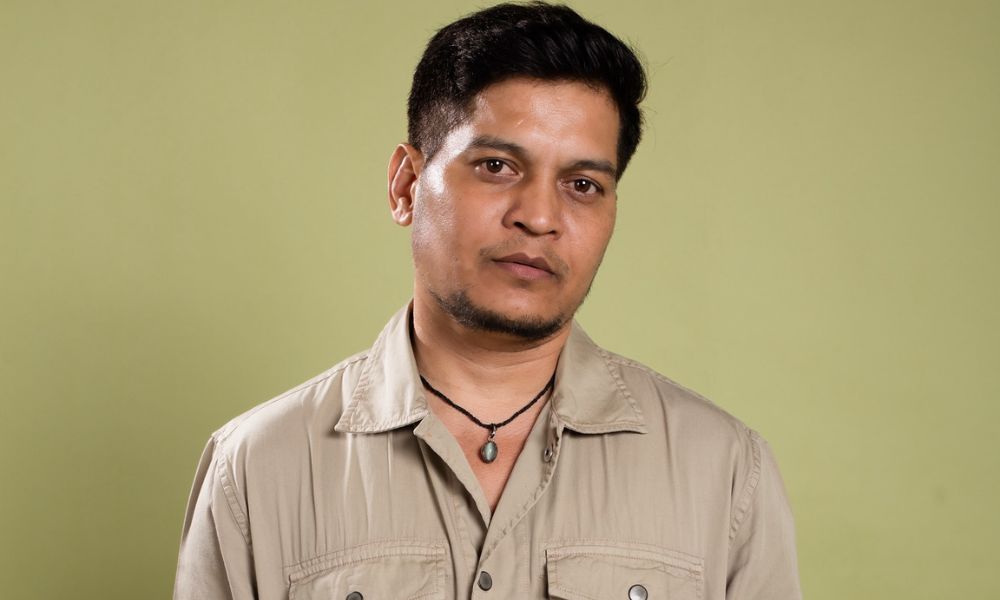
Lucky Bisht’s life story sounds like a film script — and, fittingly, it is becoming one. According to his own account and the best-selling biography written about him, he was recruited into India’s Research and Analysis Wing at just 16, trained in Israel, ran covert operations across multiple countries under different identities, guarded Narendra Modi, won a national commando award, was jailed for five years in a murder case, and walked out acquitted to become an author with over a million followers.
It is an extraordinary story — and also one that, by its very nature, sits partly beyond verification. India’s RAW does not confirm who its agents are, which means much of Bisht’s “spy” past rests on his own testimony. This article tells his story honestly: separating the documented facts from the claims, neither debunking what cannot be checked nor presenting it as proven. Here is the real story of Lucky Bisht — as far as it can actually be established.
The Verifiability Problem — Read This First
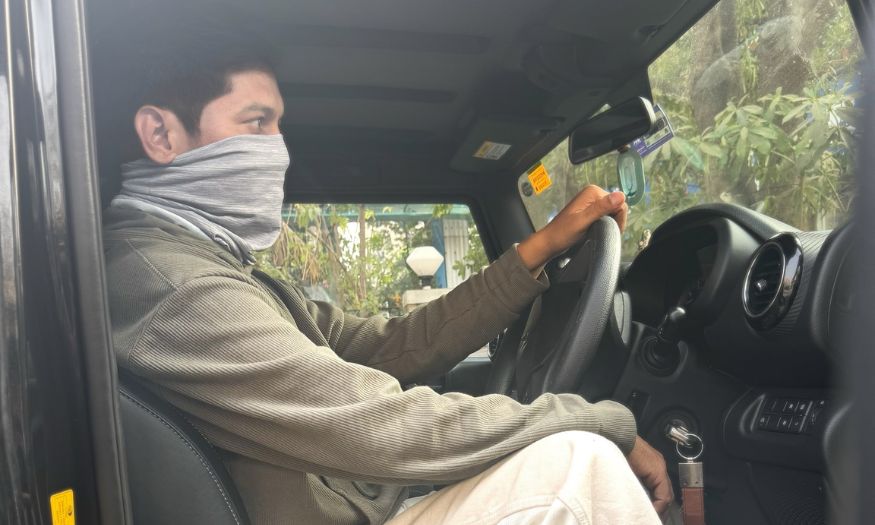
Before any biography of Lucky Bisht makes sense, one thing must be clear: the most dramatic parts of his story cannot be independently verified, and that is central to understanding him.
Bisht’s fame rests on his claimed career as a RAW agent and intelligence operative. But the Research and Analysis Wing is India’s external intelligence agency, and it does not publicly confirm the identities, missions, or even the existence of its agents. This is normal for any major intelligence service worldwide. It means that claims about secret missions in Congo, Balochistan, or elsewhere — central to his narrative — rely almost entirely on his own account and the biography based on his recollections.
Even the book about him reflects this tension. Its author, the respected crime writer S. Hussain Zaidi, framed Bisht’s life around a genuine question — “a prisoner or a patriot?” — and coverage has openly noted debate over the verifiability of classified RAW details, given the agency’s opacity. The honest approach, therefore, is not to call him a fraud (there is no basis for that) nor a confirmed super-spy (there is no way to verify that), but to report what is documented and clearly label the rest as his own account.
Early Life & Claimed Recruitment
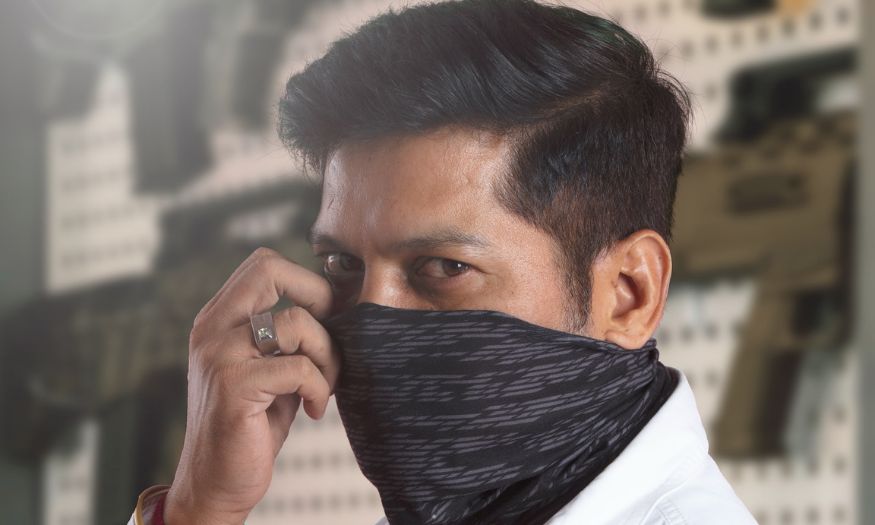
Lucky Bisht — full name Laxman Singh Bisht — was born in Uttarakhand into what is reported to be a military family. (Sources differ on his exact hometown, citing either Gangolihat in Pithoragarh district or Haldwani.) Coming from a background connected to the armed forces is consistent with his eventual path into security and defence work.
According to his own account, his entry into the intelligence world was remarkably early. He says he was recruited at the age of 16, in 2003, after passing medical and written tests — and that rather than conventional army enlistment, he was diverted into specialised secret training, including a reported two-year stint in Israel. He claims he was then deployed to India’s North East and later sent abroad to countries including Congo and the Balochistan region, working under different cover identities.
These early-life claims are the foundation of his entire public persona — and they are also exactly the parts that cannot be checked against any independent record. They come from Bisht himself and the biography built on his recollections. They may well be true; the point is simply that they are his testimony rather than documented fact, and an honest profile should say so.
What Is Documented — The Award, the Murder Case & the Acquittal
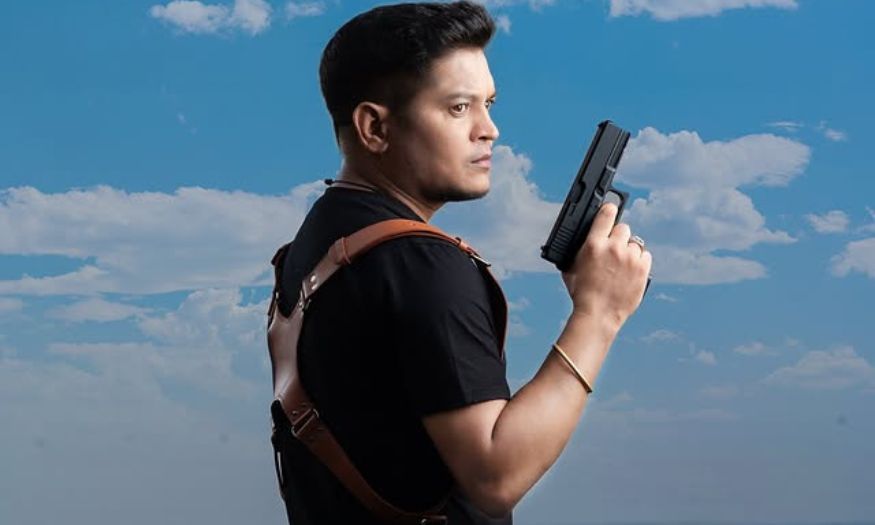
Beyond the unverifiable spy claims, several parts of Lucky Bisht’s life are far more concretely documented — and they are dramatic in their own right.
He is widely reported to have earned the title of “India’s Best NSG Commando” in 2009, and to have served in security roles — including, by multiple accounts, as a security officer for Narendra Modi during Modi’s time as Chief Minister of Gujarat, and as part of the security arrangements during US President Barack Obama’s 2010 visit to India. These roles place him within the documented world of Indian VIP security, separate from the classified RAW claims.
The most concretely documented chapter is also the darkest. In 2011, Bisht was arrested in connection with the twin-murder case of Raju Pargai and Amit Arya near the Uttarakhand–Nepal border. He spent roughly five years in jail. He and the biography portray the encounter as part of an intelligence-driven operation rather than ordinary crime — though that framing is, again, his account. What is documented is the core fact: he was arrested, imprisoned, and later acquitted, reportedly in 2018. This prisoner-to-acquittal arc is the verifiable spine of his public story.
The RAW Hitman Book — How He Became Famous
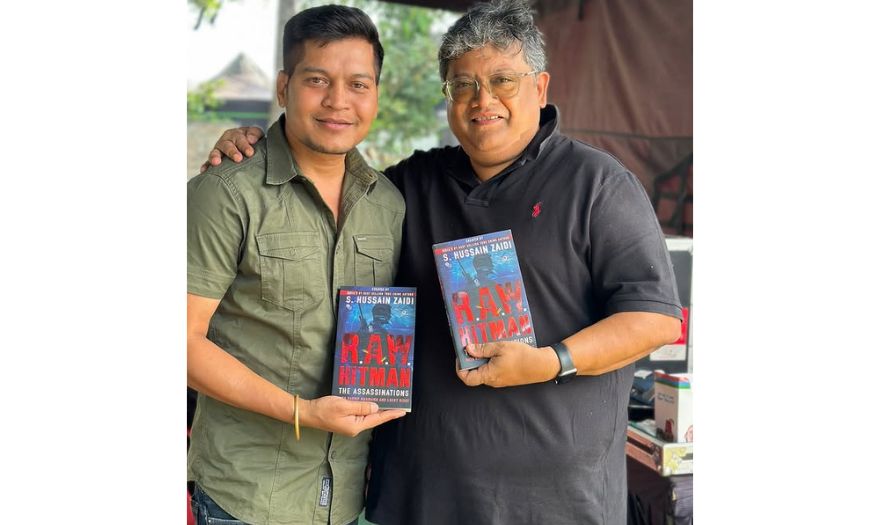
Lucky Bisht’s transformation from an obscure ex-security figure into a public personality came through a book.
In 2023, the acclaimed crime writer and former investigative journalist S. Hussain Zaidi authored Bisht’s biography, R.A.W. Hitman: The Real Story of Agent Lima, published by Simon & Schuster — one of the world’s largest publishing houses. The book was notable enough that coverage described it as the second biopic Simon & Schuster published in India after Sachin Tendulkar’s. It chronicles Bisht’s claimed career across the Army, Assam Rifles, Special Forces, RAW, and the NSG, built largely from a 2022 interview in which Bisht recounted his life to Zaidi.
The book reportedly became a best-seller within weeks, turning Bisht into a recognisable name and a viral social-media figure with over 1.2 million Instagram followers. A sequel, R.A.W. Hitman 2: The Assassinations, followed in 2024. The book’s success — and Zaidi’s reputation as a serious crime writer — gave Bisht’s story mainstream credibility and reach, even as the underlying classified claims remained inherently unverifiable.
The Pivot to Cinema, Social Media & Bigg Boss
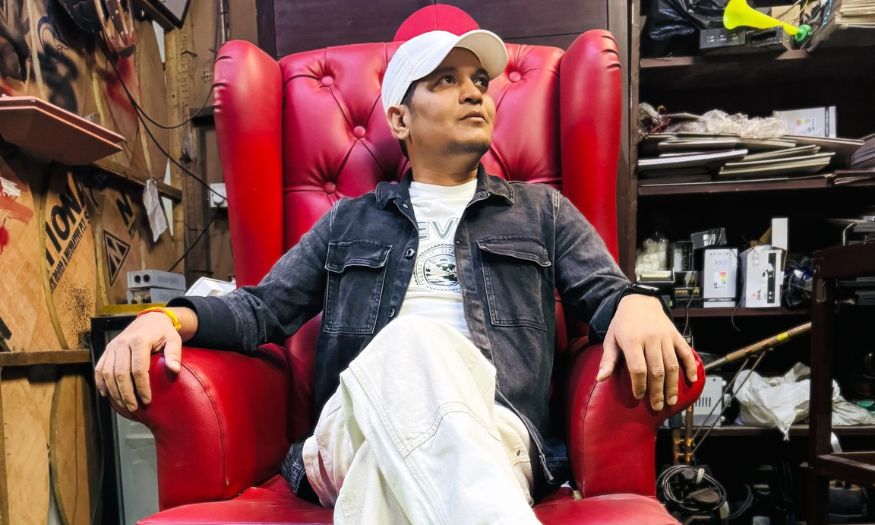
On the back of the book’s success, Lucky Bisht built a second career as a writer, producer, and screen personality.
He moved into Indian cinema as a writer, reportedly penning multiple web series and a film, drawing on his claimed experiences to tell military and intelligence-themed stories. In 2025, he made his acting debut, appearing in the series Sena: Guardians of the Nation. His large social-media following — built on his “RAW Hitman” persona, with its mix of patriotism, valour tales, and mystique — became a platform in its own right.
That fame brought a notable offer: he was reportedly approached to join Bigg Boss 18 (2024) for a substantial fee. He turned it down, citing — fittingly for his persona — the secrecy of his claimed background. Through a spokesperson, he said that as a RAW agent, “our lives are often shrouded in secrecy,” and that he was trained never to reveal his identity. Whether one reads that as genuine operational discipline or as savvy persona-management, it kept his mystique intact and generated fresh headlines.
It is worth noting that there is a separate, well-known TV actress named Donal Bisht — the two are unrelated and should not be confused.
Lesser Known Facts About Lucky Bisht
- Lucky Bisht’s full name is Laxman Singh Bisht; his claimed code name is “Agent Lima.”
- He claims he was recruited into intelligence work at age 16 in 2003 — though this rests on his own account.
- He reportedly trained in Israel for around two years, per his narrative.
- He is widely reported to have won “India’s Best NSG Commando” in 2009.
- He reportedly served as a security officer for Narendra Modi during Modi’s time as Gujarat Chief Minister.
- He was reportedly part of security during Barack Obama’s 2010 India visit.
- He was arrested in 2011 in the Pargai–Arya twin-murder case, jailed for around five years, and later acquitted.
- His biography, R.A.W. Hitman: The Real Story of Agent Lima (2023), was written by crime writer S. Hussain Zaidi and published by Simon & Schuster.
- The book was reportedly Simon & Schuster’s second India biopic after Sachin Tendulkar’s.
- A sequel, R.A.W. Hitman 2: The Assassinations, followed in 2024.
- He turned down a reported Bigg Boss 18 offer, citing the secrecy of his background.
- He made his acting debut in Sena: Guardians of the Nation (2025) and has 1.2 million+ Instagram followers.
3 Things Most Articles About Lucky Bisht Miss
1. The honest story is “documented vs. claimed” — and most coverage collapses that distinction. Nearly every article either presents Bisht as a confirmed super-spy or quietly implies he is a fraud. Both are lazy. The truthful, useful version separates the documented record (the book, the NSG award, the murder case, the acquittal, the public security roles) from the inherently unverifiable claims (secret RAW missions abroad). Holding that line is not a hedge — it is the only intellectually honest way to write about someone whose career is, by design, partly unprovable.
2. RAW’s secrecy is exactly why his claims can’t be confirmed — and that is not suspicious by itself. Some readers assume that “unverifiable” means “false.” But no intelligence agency on earth confirms its agents, so the absence of official confirmation is precisely what you would expect whether his claims were true or exaggerated. This cuts both ways: it means his story can’t be proven, but it also means the lack of proof isn’t evidence against him. Understanding this is key to evaluating him fairly rather than emotionally.
3. His real, verifiable achievement is the reinvention itself. Whatever the truth of the spy claims, one thing is documented and remarkable: a man who spent five years in jail in a murder case emerged, was acquitted, and rebuilt himself into a Simon & Schuster author, a screen-writer, and a million-follower public figure. That second act — the post-prison transformation into a media personality and storyteller — is concrete, impressive, and arguably the most genuinely interesting part of his story, regardless of what happened in any alleged operation abroad.
Also Read: Our Trending section
FAQ — What People Are Searching About Lucky Bisht
Who is Lucky Bisht?
Lucky Bisht (full name Laxman Singh Bisht) is an Indian author, screen-writer, and social-media personality from Uttarakhand who is widely known as the subject of the biography R.A.W. Hitman: The Real Story of Agent Lima (2023). He claims a background as a RAW agent, NSG commando, sniper, and former security officer for Narendra Modi. Some of his claims — particularly the classified intelligence work — cannot be independently verified, as India’s RAW does not confirm agents’ identities.
Is Lucky Bisht really a RAW agent?
This cannot be independently confirmed. India’s Research and Analysis Wing does not publicly verify the identities of its agents, so Bisht’s claimed RAW career rests largely on his own account and the biography written about him. This is not proof that the claims are false — no agent’s identity is ever officially confirmed — but it does mean his intelligence background should be understood as his own testimony rather than independently established fact.
What is the book R.A.W. Hitman about?
R.A.W. Hitman: The Real Story of Agent Lima (2023) is Lucky Bisht’s biography, written by crime author S. Hussain Zaidi and published by Simon & Schuster. It chronicles his claimed career across the Indian Army, Assam Rifles, Special Forces, RAW, and the NSG, along with the 2011 murder case for which he was jailed and later acquitted. A sequel, R.A.W. Hitman 2: The Assassinations, was released in 2024.
Why was Lucky Bisht in jail?
Lucky Bisht was arrested in 2011 in connection with the twin-murder case of Raju Pargai and Amit Arya near the Uttarakhand–Nepal border, and spent roughly five years in jail. He and his biography frame the incident as part of an intelligence operation, though that characterisation is his own account. What is documented is that he was imprisoned and subsequently acquitted, reportedly in 2018.
Did Lucky Bisht join Bigg Boss?
No. Lucky Bisht was reportedly offered a place on Bigg Boss 18 (2024) for a substantial fee but turned it down. He cited the secrecy of his claimed intelligence background, saying through a spokesperson that RAW agents are “trained to never reveal” their identities. He has, however, entered screen acting separately, debuting in the 2025 series Sena: Guardians of the Nation.
Lucky Bisht is one of the more fascinating and genuinely hard-to-categorise figures in India’s current public landscape. His story — secret recruitment at 16, missions abroad, a national commando award, prison, acquittal, and reinvention as an author — is gripping, and parts of it are solidly documented. Other parts, by the nature of intelligence work, may never be confirmed or denied by anyone but him.
That is exactly why the honest way to tell his story is to hold both truths at once: to credit what is on the record, to flag what rests on his word, and to resist the temptation to either crown him a confirmed super-spy or dismiss him as a fabulist. What is undeniable is the remarkable second act — the jailed man who walked free and became a best-selling subject, a screen-writer, and a million-follower personality. Whatever happened in the shadows, that reinvention happened in plain sight.